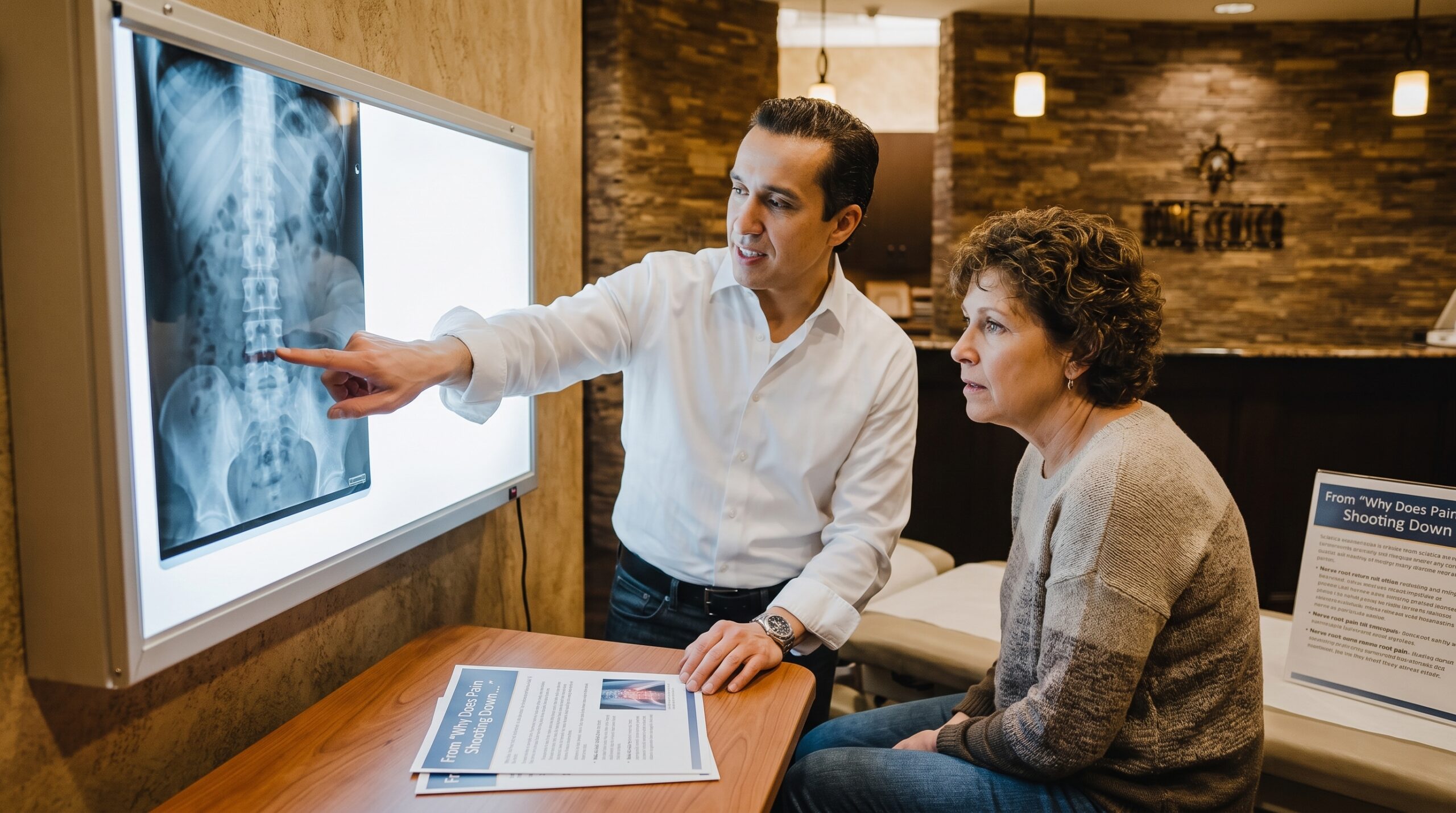

Pain shooting down your leg most often comes from a nerve in your lower back being irritated or compressed — though not every case does, and a few causes need a different kind of care. When it wakes you at night or makes the walk from the car feel uncertain, it is hard not to fear something serious is happening. That fear is reasonable, and it is answerable. What tells the causes apart is the pattern: where the pain starts, how far down it travels, and which signs mean you should be seen promptly rather than waiting it out.
Is pain that runs down one leg usually a nerve problem?
Traveling leg pain often points to nerve irritation. The sciatic nerve is the largest nerve in the body, and symptoms can occur when nerve roots in the lower spine are inflamed, crowded, or compressed.
A disc that bulges or herniates may narrow the space around a nerve root, while spinal stenosis, arthritis-related changes, or injury can create a similar pattern. StatPearls reports that sciatica has a lifetime incidence of 10% to 40%, and Mayo Clinic notes that it typically affects one side and may cause pain, numbness, tingling, or weakness from the low back through the leg. Not every ache in the leg is sciatica; hip problems, muscle injuries, circulation issues, and other conditions can overlap at first.
Pain that begins near the low back and shoots below the knee is more suggestive of a nerve pattern than a sore spot confined to one muscle after a hard workout, especially when coughing, bending, sitting, or standing changes the sensation.
Why does getting the cause right matter so much?
The wrong explanation can delay the right next step. If you treat a worsening nerve problem as a pulled muscle, you may keep pushing through changes that deserve an exam.
Imagine standing at the kitchen counter long enough to make dinner, then feeling burning move down the outside of your calf and into two toes. The pain may be the obvious problem, yet the loss of leg strength, balance, sleep, and confidence is often what shrinks daily life first.
I have seen that people describe the same symptom in very different ways: “my back keeps going out,” “my leg keeps tingling,” or “I cannot sleep from the pain.” The useful detail is what happens next—whether the pain stays above the knee, reaches the foot, appears during standing, or comes with numbness or weakness.

What can put pressure on a nerve in your lower back?
A disc problem is one possible cause of radiating leg pain. It is not the only cause, so a scan result or online symptom checker should not decide the whole story.
Could a herniated or bulging disc be involved?
A spinal disc is a cushion between the bones of the spine. When its outer layer weakens or its inner material pushes outward, the disc can irritate a nearby nerve root, although many people have disc changes on imaging without pain.
The symptom pattern becomes more meaningful when the image, exam, and day-to-day limits line up. A disc finding alone cannot explain why your foot feels numb after ten minutes in a grocery store, but it can give the examiner a clue to investigate.
Could spinal stenosis cause a different pattern?
Spinal stenosis can make walking and standing harder. It means the spaces around spinal nerves have narrowed, which may bring on leg pain, heaviness, tingling, or weakness during upright activity.
Some people with stenosis feel better when they sit or lean forward. That contrast matters because a leg that hurts only when walking needs a broader look than “it must be a disc.”
Can the neck matter when the pain is in your leg?
The lower back may be the main source of leg symptoms, but the rest of the spine still affects how you stand, move, and load your body. A careful evaluation should consider more than the one spot that hurts.
Which symptoms fit nerve-related leg pain?
Nerve pain often feels electric, burning, or sharp. It may travel along a line rather than stay in one tender patch.
You may notice:
- Pain that moves from the low back or buttock into the thigh, calf, or foot
- Pins-and-needles after sitting, bending, or standing
- Burning or a shock-like feeling along one side of the leg
- A numb area in the foot, ankle, or lower leg
- Weakness when lifting the front of the foot or pushing off while walking
- Symptoms that worsen with a cough, sneeze, or certain back movements
The American Medical Association explains that sciatica can include numbness, weakness, and tingling as well as pain. Those symptoms should not be brushed aside merely because sharp pain eases for a day.
I have found that the most helpful symptom history is concrete. “My leg hurts” is a starting point, but “the outside of my foot goes numb after I stand through my grandson’s game” gives an examiner something they can test against your movement and findings.
When should you seek medical care right away?
Certain leg symptoms need prompt medical evaluation. Do not wait for a routine spine visit when nerve function is changing quickly or a serious condition may be involved.
Seek urgent medical care for any of these warning signs:
- New trouble controlling your bladder or bowels
- Numbness in the groin, inner thighs, or saddle area
- Rapidly worsening weakness in one or both legs
- Severe pain after a major fall, crash, or other injury
- Fever with severe back pain or feeling seriously unwell
- Pain in both legs with new balance problems or difficulty walking
- A leg that becomes suddenly swollen, red, pale, cold, or unusually painful
Mayo Clinic’s sciatica guidance advises prompt care for severe or worsening symptoms, sudden numbness or weakness, and bowel or bladder changes. The American Medical Association similarly flags weakness, numbness, and bowel or bladder dysfunction as reasons for medical assessment.
Necessary medical or surgical care is not a failure of non-surgical care; it is the right response when the findings show that waiting could risk harm.
What mistakes can make radiating leg pain harder to sort out?
Waiting for weakness to become obvious is a risky choice. Pain can be loud, but changes in strength, walking, or bladder and bowel function often matter more from a safety standpoint.
Another common mistake is treating a label as a full answer. “Sciatica” describes a pattern of symptoms, not one guaranteed cause, so it does not tell you whether the driver is a disc, narrowing around the nerve, a hip issue, or something outside the spine.
Avoid forcing stretches through sharp pain. Gentle movement may be tolerable for some people, but a stretch that sends pain farther down the leg is useful information to report, not a challenge to win. Keep track of what changes the symptoms, including sitting, driving, walking, stairs, sleep, and coughing.
How can a spine evaluation help you decide what to do?
An evaluation connects symptoms to measurable findings. That is more useful than guessing whether age, wear, or one bad movement explains everything.
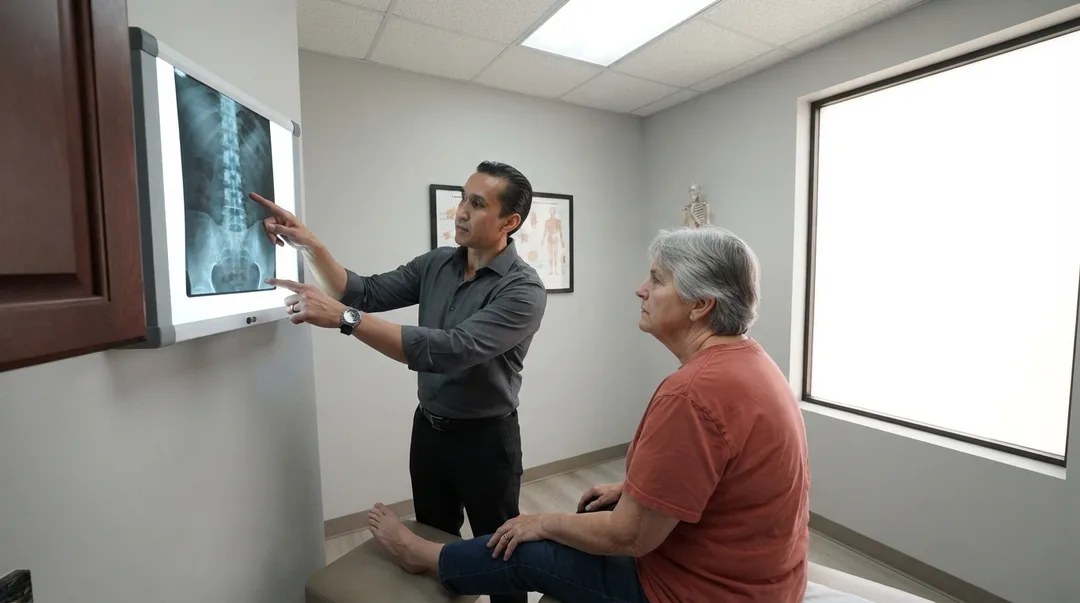
At North Dallas Spine Center, you can request a Complimentary Spine Consultation that can include a consult, exam, X-rays, a treatment plan, first-visit Shockwave, and general advice when appropriate for your visit. The purpose is to determine what may be driving your pain and whether the clinic may be able to help, not to promise that every person is a candidate.
Bring prior imaging reports if you have them, then explain where the pain starts, where it travels, and what your leg does during a normal day. Mention recent falls, past spine procedures, bone health concerns, and any new neurological changes because those details can change what is safe to consider.
For the right candidate, The NUCCA + Spinal Decompression Protocol combines the NUCCA procedure with Non-Surgical Spinal Decompression to assess upper-spinal movement and create space around disc-related nerve pressure. Noticeable pain reduction and increased mobility may begin within 2–3 weeks for the right candidate, though your response depends on the cause, severity, and full findings.
Serving Plano and the broader Dallas metropolitan area, Dr. Oscar Presas has more than 15 years in practice and has served 500+ clients. His own severe lower-back injury at 19 left him unable to get out of bed, and that experience still shapes a practical standard: find out what is driving the symptoms before deciding what path fits.
If leg pain has started deciding whether you can work a full day, sleep through the night, or lift a grandchild, request a Complimentary Spine Consultation in Plano, Texas. Consultation times are limited by Dr. Presas’s next-day schedule, so once those visits fill, the next available visit must be booked.
A careful evaluation can show whether a non-surgical path is reasonable, whether another provider is needed, and why pain shooting down leg should not be ignored.
Frequently asked questions
Why is pain shooting down my leg happening?
Pain that travels from your low back, hip, or buttock into the leg can happen when a spinal nerve is irritated or crowded. A bulging or herniated disc, spinal stenosis, or joint changes may contribute. Hip, muscle, and circulation problems can also cause leg pain, so the pattern needs an exam.
Is shooting leg pain always sciatica?
No. Sciatica describes a pattern of pain, tingling, numbness, or weakness that may follow a nerve from the lower back into one leg. Similar symptoms can come from hip problems, muscle injury, or blood-flow concerns. Where the pain starts, how far it travels, and what triggers it help narrow the cause.
What does nerve pain down the leg feel like?
Nerve-related leg pain often feels burning, electric, sharp, or like a sudden shock. It may travel below the knee into the calf, ankle, foot, or toes and can come with pins-and-needles or numbness. Coughing, bending, sitting, or standing may change the symptoms.
When is pain shooting down my leg an emergency?
Seek prompt medical care for new bladder or bowel control problems, numbness in the groin or inner thighs, or rapidly worsening leg weakness. Severe pain after a major injury, fever with serious back pain, or a suddenly swollen, pale, cold, or red leg also needs urgent evaluation.
Can a bulging disc cause pain down one leg?
A bulging disc can contribute to pain down one leg when it irritates or crowds a nearby nerve root. Many people have disc changes without symptoms, so an imaging finding alone cannot confirm the cause. Your symptom pattern, movement exam, and imaging findings need to line up.
Why does leg pain worsen when I stand or walk?
Standing and walking can increase symptoms when a spinal nerve is crowded, especially with spinal stenosis or some disc-related problems. Some people notice heaviness, burning, tingling, or weakness that eases when they sit or lean forward. Leg pain with walking can also have non-spinal causes that need consideration.
What happens at a spine consultation for leg pain?
A Complimentary Spine Consultation at North Dallas Spine Center in Plano, Texas can include a consult, exam, X-rays, treatment plan, first-visit Shockwave, and general advice when appropriate. The purpose is to determine what may be driving the leg pain and whether you may be a candidate for a non-surgical path.